Titanium Plate (Pure Titanium/Titanium Alloy Plate) Production Process and Applications
- Share
- publisher
- Ellen
- Issue Time
- Jun 24,2026
Summary
Titanium plates are divided into two main categories: pure titanium plates GR1/GR2 (corrosion resistant) and titanium alloy plates GR5(Ti-6Al-4V, high strength).
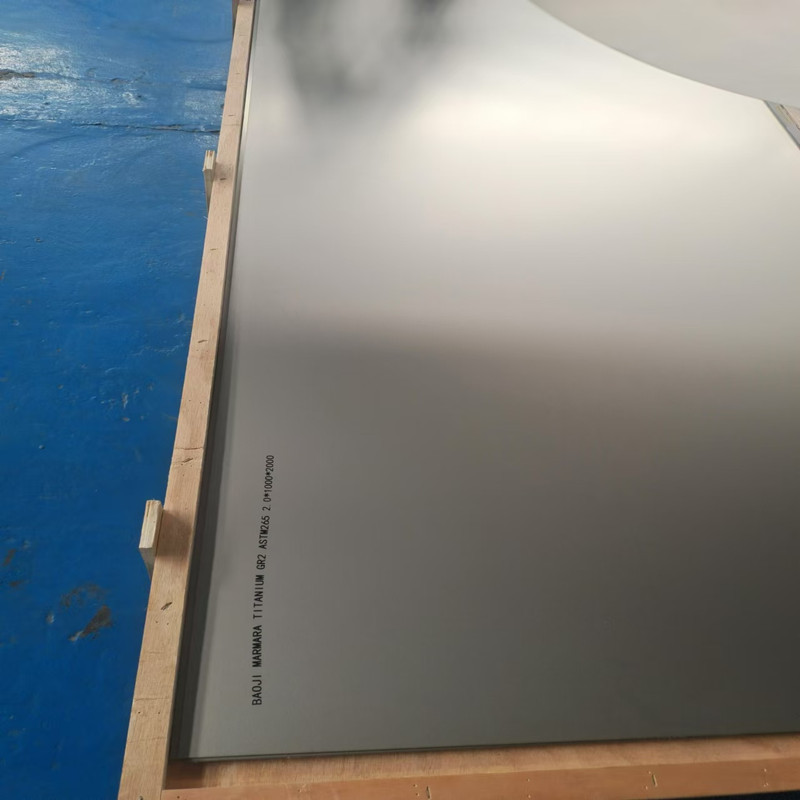
Titanium Plate (Pure Titanium/Titanium Alloy Plate) Production Process and Applications
Titanium plates are divided into two main categories: pure titanium plates GR1/GR2 (corrosion resistant) and titanium alloy plates GR5(Ti-6Al-4V, high strength).
(I) Complete Production Process
1. Vacuum Melting to Form Titanium Ingots: Sponge titanium + alloy aluminum/vanadium raw materials are melted and cast into titanium ingots in a vacuum consumable arc furnace; oxygen is isolated, and oxygen and hydrogen impurities are strictly controlled to ensure plasticity and toughness. Medical grade requires ultra-low interstitial element melting.
2. Forging and Billet Opening: Repeated upsetting and drawing at 850–950℃ breaks up coarse cast grains, eliminates internal loose cracks, and obtains a smooth titanium billet.
3. Rolling Forming (Hot Rolling + Cold Rolling)
- Hot Rolling (Thick Plate 3–100mm): High-temperature rolling at 800–930℃, large reduction, suitable for medium and heavy industrial plates and chemical equipment plates;
- Cold Rolling (Thin Plate 0.1–5mm): Room temperature rolling, bright surface, extremely high dimensional accuracy, specifically for ultra-thin titanium bipolar plates for fuel cells and thin medical plates; intermediate annealing during cold rolling eliminates work hardening.
4. Heat Treatment
- Pure Titanium Plate: Vacuum stress-relief annealing to eliminate rolling stress;
- GR5 Alloy Plate: Solution treatment + aging treatment, significantly improving tensile strength, standard for aerospace structural components.
5. Surface Finishing
Acid pickling to remove oxide scale, sandblasting, polishing, anodizing; passivation treatment for medical titanium plates to improve biocompatibility; TiN conductive and anti-corrosion coating for fuel cell plates.
(II) Applications of Titanium Plates
1. Aerospace (Mainly GR5 Titanium Alloy Plates): Aircraft fuselage skin, landing gear, engine compressor components; specific strength far exceeds steel, weight reduction of 30%, stable performance at 500℃, core material for military and civil aircraft.
2. Chemical and Marine Corrosion Protection (GR5 Pure Titanium Plates): Seawater desalination heat exchangers, chemical reactors, pickling tanks, marine seawater pipelines; resistant to chloride ions, acid and alkali corrosion, lifespan more than 5 times that of stainless steel.
3. Medical Implants (Biocompatible Metals): Orthopedic fracture fixation titanium bone plates, bone nails, artificial joint base plates, dental implant plates; no rejection, human bone can integrate with the titanium surface bone, conforms to medical ASTM standards.
4. New Energy Hydrogen Energy: PEM electrolysis water production porous titanium diffusion plates, ultra-thin bipolar plates for hydrogen fuel cells; lightweight, conductive, acid corrosion resistant, core material for next-generation hydrogen energy equipment.
5. Nuclear Power and Energy Equipment: Seawater cooling heat exchangers for nuclear power plants; corrosion-resistant photovoltaic brackets, stable over a wide temperature range, and radiation resistant.
6. High-End Daily Necessities/Construction: High-end eyeglass frames; outdoor corrosion-resistant decorative panels; high-end kitchenware; anodizing available in various metallic colors, lightweight and rust-resistant.
Titanium Plate (Pure Titanium/Titanium Alloy Plate) Production Process and Applications
Titanium plates are divided into two main categories: pure titanium plates GR1/GR2 (corrosion resistant) and titanium alloy plates GR5(Ti-6Al-4V, high strength).
(I) Complete Production Process
1. Vacuum Melting to Form Titanium Ingots: Sponge titanium + alloy aluminum/vanadium raw materials are melted and cast into titanium ingots in a vacuum consumable arc furnace; oxygen is isolated, and oxygen and hydrogen impurities are strictly controlled to ensure plasticity and toughness. Medical grade requires ultra-low interstitial element melting.
2. Forging and Billet Opening: Repeated upsetting and drawing at 850–950℃ breaks up coarse cast grains, eliminates internal loose cracks, and obtains a smooth titanium billet.
3. Rolling Forming (Hot Rolling + Cold Rolling)
- Hot Rolling (Thick Plate 3–100mm): High-temperature rolling at 800–930℃, large reduction, suitable for medium and heavy industrial plates and chemical equipment plates;
- Cold Rolling (Thin Plate 0.1–5mm): Room temperature rolling, bright surface, extremely high dimensional accuracy, specifically for ultra-thin titanium bipolar plates for fuel cells and thin medical plates; intermediate annealing during cold rolling eliminates work hardening.
4. Heat Treatment
- Pure Titanium Plate: Vacuum stress-relief annealing to eliminate rolling stress;
- GR5 Alloy Plate: Solution treatment + aging treatment, significantly improving tensile strength, standard for aerospace structural components.
5. Surface Finishing
Acid pickling to remove oxide scale, sandblasting, polishing, anodizing; passivation treatment for medical titanium plates to improve biocompatibility; TiN conductive and anti-corrosion coating for fuel cell plates.
(II) Applications of Titanium Plates
1. Aerospace (Mainly GR5 Titanium Alloy Plates): Aircraft fuselage skin, landing gear, engine compressor components; specific strength far exceeds steel, weight reduction of 30%, stable performance at 500℃, core material for military and civil aircraft.
2. Chemical and Marine Corrosion Protection (GR5 Pure Titanium Plates): Seawater desalination heat exchangers, chemical reactors, pickling tanks, marine seawater pipelines; resistant to chloride ions, acid and alkali corrosion, lifespan more than 5 times that of stainless steel.
3. Medical Implants (Biocompatible Metals): Orthopedic fracture fixation titanium bone plates, bone nails, artificial joint base plates, dental implant plates; no rejection, human bone can integrate with the titanium surface bone, conforms to medical ASTM standards.
4. New Energy Hydrogen Energy: PEM electrolysis water production porous titanium diffusion plates, ultra-thin bipolar plates for hydrogen fuel cells; lightweight, conductive, acid corrosion resistant, core material for next-generation hydrogen energy equipment.
5. Nuclear Power and Energy Equipment: Seawater cooling heat exchangers for nuclear power plants; corrosion-resistant photovoltaic brackets, stable over a wide temperature range, and radiation resistant.
6. High-End Daily Necessities/Construction: High-end eyeglass frames; outdoor corrosion-resistant decorative panels; high-end kitchenware; anodizing available in various metallic colors, lightweight and rust-resistant.