Titanium-Copper Composite Rods: Common Specifications and Applications
- Share
- Issue Time
- Jun 2,2026
Summary
Titanium-Copper Composite Rods: Common Specifications and Applications
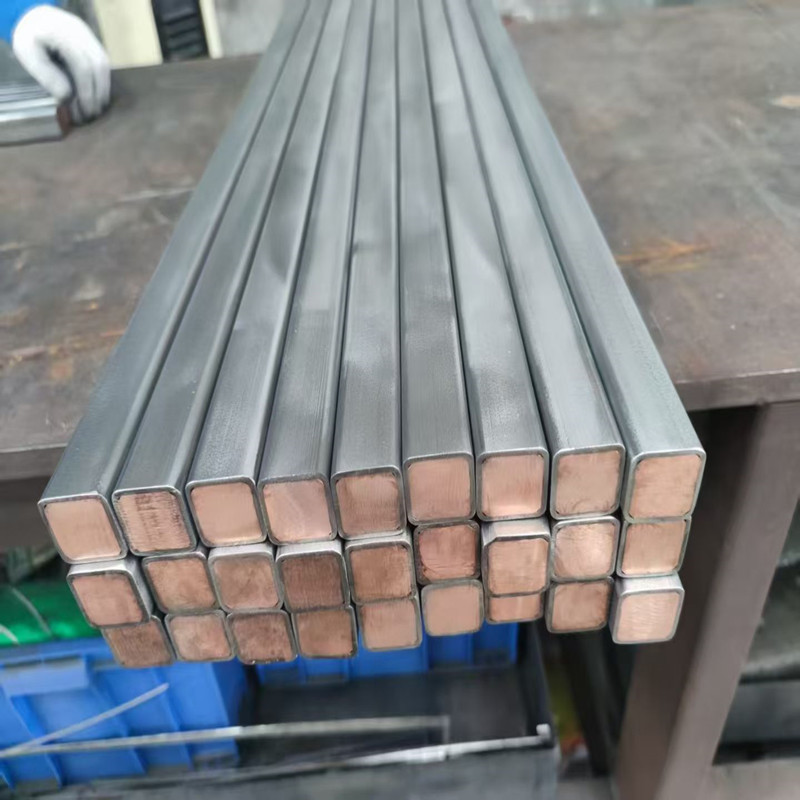
Titanium-Copper Composite Rods: Common Specifications and Applications
I. Common Specifications
1. Structural Forms
The mainstream type is titanium-clad copper (outer layer of pure titanium/titanium alloy, inner layer of copper), but copper-clad titanium also exists. Industrially, titanium-clad copper is the primary form.
2. Shape Classification & Size Range
(1) Round Bar (Most Commonly Used)
Outer Diameter (Total Diameter of Titanium Layer + Copper Core): φ6mm~φ200mm
Copper Core Diameter: φ3mm~φ180mm
Titanium Layer Thickness: 0.3mm~10mm (Standard 1~3mm)
Length: 500mm~6000mm, can be cut to length
(2) Square Bar / Rectangular Bar
Cross-section Size: 10×10mm ~ 150×150mm
Uniform Thickness of Titanium Coating: 0.4~5mm
Fixed Length: 1000~4000mm
(3) Irregularly Shaped Bar / Stepped Bar
Customized according to drawings, featuring steps, chamfers, threads, flat heads, etc., mostly used for electrodes and connectors. 3. Material Combinations (Mainstream Combinations)
Titanium Coating: TA1, TA2 (industrial pure titanium), preferred for corrosion resistance; a small number use TC4 titanium alloy (high strength)
Copper Core: T2, C11000 copper (high electrical and thermal conductivity); H62 brass is used in some applications.
4. Standards Applied
Refer to: ASTM B863, GB/T 3620, GB/T 2059, enterprise-specific standards for composite profiles.
II. Core Performance Characteristics
Combines the strong corrosion resistance and oxidation resistance of titanium with the high electrical and thermal conductivity and low electrical resistance of copper, while also being high-temperature resistant, wear-resistant, non-leaching, and having a service life far exceeding that of pure copper rods.
III. Main Applications
1. Chemical/Hydrometallurgical Industry (Largest User)
Electrolytic cell anode rods, conductive columns, conductive rods, electrode rods
Electrolytic equipment for hydrometallurgical copper, nickel, cobalt, manganese, zinc, and other non-ferrous metals
Conductive connectors and busbar supports for acid, alkali, and salt corrosion environments
2. Electroplating/Surface Treatment Industry
Anode rods, conductive hanger substrates, conductive spindles for electroplating production lines
Conductive components for chromium plating, nickel plating, copper plating, and acid/alkali etching equipment, corrosion resistant + low voltage drop
3. Chlor-alkali/Salt Chemical Industry
Conductive rods and anode supports for chlor-alkali electrolysis units
Dedicated conductive structural components for brine, chlorine, and strong alkali conditions
4. Water Treatment & Environmental Protection Equipment
Electrode rods for wastewater treatment, seawater desalination, and electrolytic descaling
Conductive components for seawater and high-chloride water bodies
5. Machinery & Electrical Equipment
Conductive connectors and grounding rods for high-temperature corrosion environments
Conductive supports for vacuum equipment and furnaces, high-temperature electrodes
Conductive accessories for marine engineering and coastal equipment (resistant to seawater corrosion)
6. Other sub-sectors: Electrode substrates for electrochemical experiments and scientific research equipment; Corrosion-resistant conductive rods for military and aerospace applications; Conductive components for highly corrosive environments such as salt production, papermaking, and printing and dyeing.